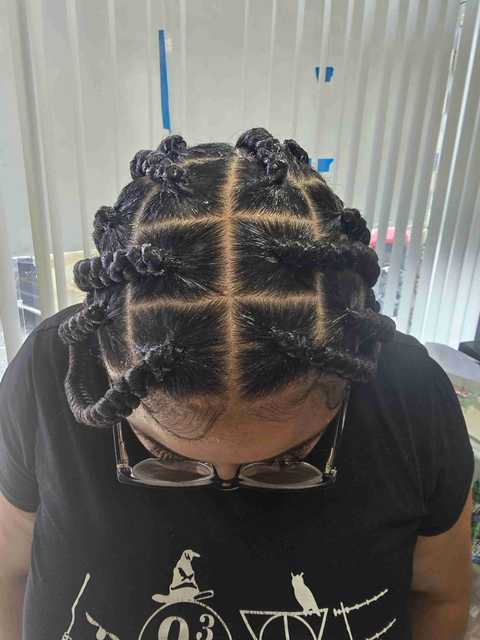
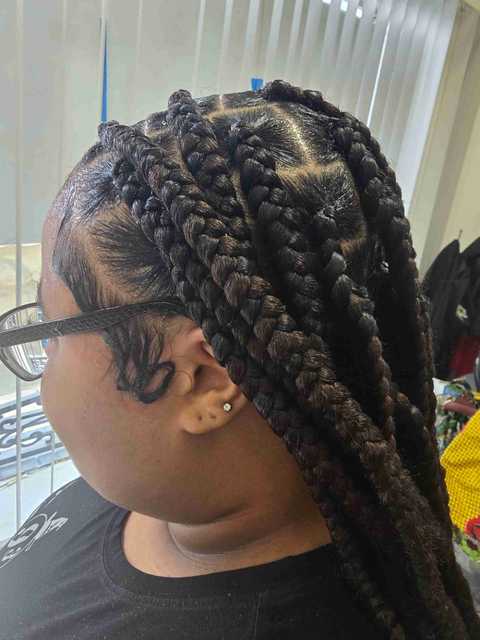
Knotless Braids vs Box Braids: Which Is Better for Edges? (Plus a quick note on fake locs)
By AFRICAN NUBIAN | August 24, 2026
We’ve had people come in around 11:30am for micro braids and finish around 3:30, and that same “in good hands” feeling matters when you’re choosing between knotless braids and box braids for your edges. Here’s the bottom line. If protecting fragile edges and getting a lighter, more natural install are top priorities, knotless braids are usually the better choice because the feed-in technique reduces root tension and bulk. Traditional box braids make sense when you want a heavier, more dramatic look, a super uniform finish, and you’re okay with more tension at the root.
And yes, we get the crossover questions in St. Louis all the time. People searching “fake locs, ” “soft locs, ” “two strand locs, ” or “instant loc” are often really asking the same thing: what style looks good, lasts, and won’t stress my hairline?
Quick decision: If your edges are thinning, you hate that “tight braid” feeling, or you want a flatter, lighter install, start with knotless. If you want the look to stay extra crisp longer and you like a more structured finish, box braids can be the better pick.
Knotless vs box braids: what we’re actually comparing (and why it matters)
Knotless braids and box braids are both protective styles. The difference is how the braid starts at the root. With traditional box braids, the extension hair is usually anchored with a knot at the base. That anchor can help the braid feel secure and can support heavier lengths and bold, uniform parts.
With knotless braids, we feed hair in gradually. That’s what gives the style its flatter base and more natural look. It also tends to reduce that “pulling” sensation that makes people worry about their edges. Around our shop, neat parting and consistent braid size are non-negotiable because they’re the foundation of both styles. People notice. We hear “neat, ” “uniform, ” and “clean parts” a lot, especially from first-timers.
AFRICAN NUBIAN knotless braids: 180 minutes | $220 | A tension-free version of box braids, providing a natural and lightweight feel.
The trade-offs that decide it: tension, time, price, and how it feels day to day
1) Tension and edge health
If you’re choosing based on edges, knotless usually wins. The feed-in start is designed to reduce tension at the root. That matters for people who already feel sensitive around the hairline or who’ve had styles in the past that left them sore. We’ve had clients tell us straight up their head was “not sore or in pain” after an install, and that’s exactly what we aim for with knotless when edges are a concern.
Box braids can still be worn in an edge-friendly way, but they’re less forgiving if the base is installed too tight. If you’re the type who likes your braids very tight for that super crisp look, that’s where you need to be honest with yourself about your hairline.
2) Install time and schedule reality
Knotless can take longer because feeding hair in correctly is detailed work. In our shop, braid appointments can run 3+ hours depending on size and length. Some styles take much longer. One person mentioned small bobo knotless taking 6 hours. If you’re trying to get braided before a trip, back-to-school, or a big weekend in St. Louis, build in the time and don’t squeeze it into a too-tight schedule.
3) Cost and what you’re paying for
Knotless is often priced higher than box braids because it’s more hands-on at the root. Our knotless braids are $220, and the goal is comfort, a natural finish, and a lighter feel. Box braids are often cheaper at many shops because the start is faster and the technique is simpler. If budget is the top concern, traditional box braids can be the practical choice.
4) How it wears in St. Louis humidity
St. Louis summers can bring humidity, sweat, and scalp buildup faster than you expect. Knotless tends to feel lighter, which a lot of active clients prefer for pool days and long outdoor events. Box braids can hold up well too, but a heavier install can feel hotter and take longer to fully dry after washing. Either way, clean scalp habits are what keep the style looking good.
“Fast and neat service…love my hair…worth the money”
one of our regulars
If you want lighter roots, pick knotless. If you want extra structure, box braids may fit.
Knotless braids fit you well if you want a natural look at the base, you prefer less bulk, and you’re choosing a protective style because your hairline needs a break. They’re also a strong option if you know you’ll be wearing the style down most of the time and you want it to move and lay flatter.
Box braids may be the better match if you love a bold, uniform look, you plan to do heavier updos, or you want the install to stay extra crisp for longer. Some people simply like that “boxed” aesthetic. That’s valid.
Real talk about tightness: A few people have told us they love the quality and clean parts, but they also prefer to speak up about tightness. Please do. Let us know right away if you need the grip adjusted, especially around your edges.
Why knotless braids at AFRICAN NUBIAN feel different (and what “neat” really means)
We’ve been doing african hair braiding in St. Louis for 25 years, and our reputation is built on consistency. People come back because the work stays clean, the parts are sharp, and the shop feels welcoming. You’ll hear it in the way regulars talk about us, like family, professional, and “they never disappoint.”
If your edges are thinning, tell us before we start. We’ve had first-time braided clients surprised by how well we can cover and blend around the hairline while still keeping the braids and box braids look polished. And if you’re comparing to other protective styles like fake locs, soft locs, two strand locs, a different type of locs, or an instant loc, we’ll be honest about what gives you the look you want without stressing your scalp.
Want help choosing? If you tell us your hairline concerns, the size you like, and how long you want to keep the style, we’ll steer you to knotless or box braids without guessing.
Call: +13143899100 | Email: fatoubambio@gmail.com
Visit us: 7281 Natural Bridge Rd, St. Louis, MO 63121-5045
If you’re still comparing styles, these guides help: benefits of knotless braids for edges, what to expect from your first knotless braids appointment in St. Louis, knotless braids for thinning edges.
FAQs we hear in the chair about knotless braids, box braids, and humidity
Are knotless braids better for thinning edges?
Usually, yes. Knotless braids start with a feed-in technique that reduces the tight “knot” at the root, so there’s typically less pulling right at the hairline. If your edges are fragile, tell us before we begin so we can keep tension conservative around the perimeter.
How long does it take to install knotless braids compared to box braids?
Knotless often takes longer because feeding hair in neatly is detailed work. Our knotless braids appointment is scheduled at 180 minutes, and timing can run longer depending on the size and length you choose. Box braids are often faster because the base is quicker to form.
How long do knotless braids usually last?
Most people wear knotless braids for several weeks, but longevity depends on your hair texture, how small the braids are, and how you care for your scalp. If you want maximum wear time, we’ll talk through braid size and maintenance so the style stays neat without stressing your edges.
Will knotless braids cost more than box braids?
Often, yes. Knotless takes more time and precision at the root. Our knotless braids are $220. Box braids are frequently priced lower at many shops, especially in larger sizes.
How should I wash and dry knotless braids in humid weather?
In St. Louis humidity, focus on your scalp and rinse thoroughly so product doesn’t sit at the roots. Squeeze out water with a towel instead of rubbing, then give yourself real drying time. A damp scalp is where itching and buildup usually start, so we want you fully dry at the base before you tie it up or go to bed.
Are soft locs a better choice than knotless braids?
Soft locs (often searched as fake locs) give a totally different look than braids. They’re great if you want the loc aesthetic without committing to permanent locs. If edge protection and a lighter root feel are your main priorities, knotless is often the easier everyday wear. If the loc look is the goal, we’ll help you choose a loc option that won’t feel heavy around your hairline.
What are two strand locs, and how do they compare to braids?
Two strand locs usually start as two-strand twists that are encouraged to lock over time. That’s different from knotless or box braids, which are braided with extensions for a finished look right away. If you want a protective style you can remove later, braids often make more sense. If you want to start locs, we’ll talk about maintenance and the commitment level first.
How do I choose a different type of locs without damaging my hairline?
Start by choosing a method and size that won’t overload your perimeter. Heavy extensions and tiny sections can stress edges, especially if you wear tight ponytails. Tell us how you like to style your hair day to day, and we’ll guide you to a size and method that keep tension under control.
What is an instant loc, and is it easier than braids?
Instant locs are a technique to create a locked look much faster than traditional locing. It’s not necessarily “easier” than braids. It’s just different, and it comes with its own upkeep. If you want a removable protective style, knotless or box braids are usually the simpler route. If you want the loc look right away, we’ll talk through the maintenance before you commit.