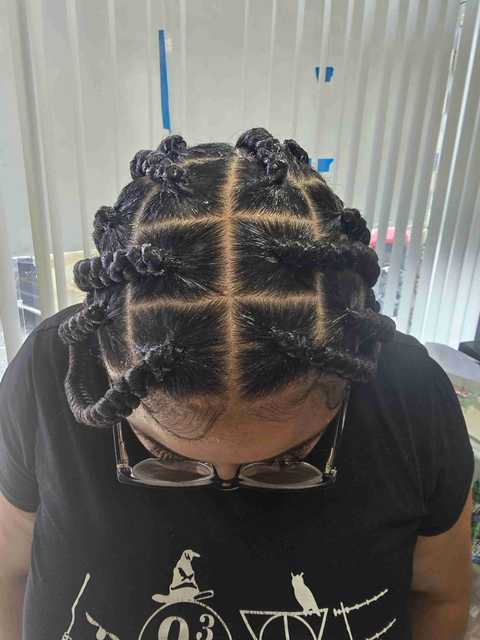
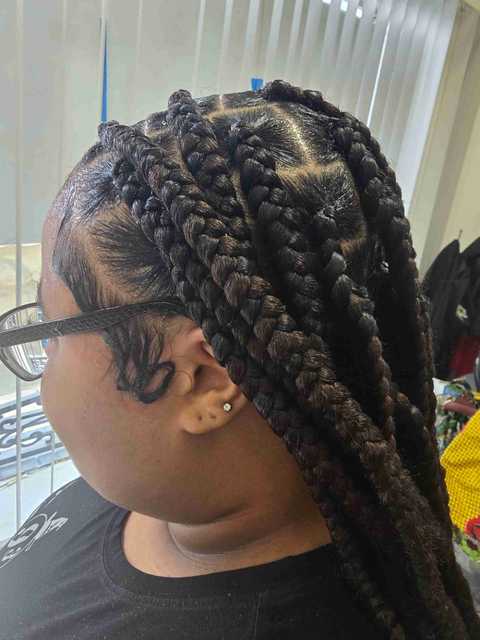
Two strand twists locs: Protective styling that saves time and hair
By AFRICAN NUBIAN | August 12, 2026
We hear it all the time: “Love my hair, ” and that’s exactly the point of Two-Strand Twists. They’re a low-manipulation protective style that cuts down daily breakage, speeds up your mornings, and helps your hair hold onto moisture when they’re installed and cared for the right way. In St. Louis, that matters, because summer heat and humidity can turn a simple wash day into a whole event. Two-Strand Twists keep your hair put together without daily detangling or heat. If you want a defined look now and better length retention over time, we’ll talk you through sizing, tension, and upkeep so the style works for your real life.
Quick reality check: Two-Strand Twists typically wear 4 to 8 weeks. Your hair texture, twist size, and how you sleep and moisturize make the biggest difference.
What we mean by “Two-Strand Twists” (and why they’re different on natural hair)
Two-Strand Twists are exactly what they sound like: we take two sections of your hair and twist them around each other to create a clean, defined rope-like twist. We install them with intention, because neat parts and consistent tension are what keep twists looking fresh longer.
This style sits in a sweet spot between everyday styling and heavier protective styles. It’s lighter than many braided styles, and it’s still structured enough to protect your ends. One of our clients put it plainly: their twists were “so beautiful and they last a few months, ” and they noticed their hair “growing back from the damage” they’d had from quick weaves elsewhere. That’s the goal. Less daily pulling, less friction, and more consistency.
If you’re comparing options like box braids, braids and box braids, or a twist-out you do at home, here’s the difference: twists reduce daily handling the way a protective style should, but they also give you flexible styling options. You can wear them down, pin them up, or later take them down for a twist-out without starting from scratch.
The real benefits: neat parts, less breakage, and hair you recognize in the mirror
A protective style only counts if it actually protects. Here’s what Two-Strand Twists are designed to do, and what our clients keep pointing out after they’re done.
1) Less daily manipulation, so your ends get a break
Twists cut down the daily cycle of combing, brushing, and re-styling. When you’re not constantly detangling, you usually see fewer snapped hairs and fewer split ends. And in St. Louis summer humidity, not having to re-slick and re-stretch your hair every morning is a big deal.
2) “Super fast” styling in the morning, with a look that still holds up
Our regulars talk about how we’re “super fast” and how we pay “attention to details.” That combo matters because speed doesn’t help if the twists get fuzzy in a week. Clean sections and consistent twist size keep the style looking polished, even if you’re moving through a busy morning and heading downtown.
3) A confidence boost that’s hard to explain until you see it
First-timers often come in nervous, especially if they’ve never done african hair braiding or protective styling in a shop. One visitor told us when their stylist finished, “I didn’t recognize myself, ” and they were impressed with how we covered thinning edges while still matching the photo they brought in. That tells you two things: we listen, and we don’t ignore the hairline.
“When the stylist finished my hair I didn’t recognize myself.”
A recent first-time visitor
4) Longevity you can plan around
People stick with us because their styles last. We hear “my braids last” and “extremely neat and fresh” over and over, and that same standard applies to twists. If you’re putting in time and money, you deserve a style that stays neat, not one you’re redoing early.
Is this the right protective style for you? Let’s make it simple
Two-Strand Twists tend to be a great fit if you’re trying to retain length, protect your ends, and stop the cycle of daily styling that leads to breakage. They’re also a smart pick if you’ve had damage from quick weaves and you want a style that feels lighter while your hair recovers.
And if you care about neatness, you’re in the right place. People come back because the work stays clean, and because we take the time to get details right, especially around the hairline and parts.
Sizing matters: Smaller twists usually last longer and give you more styling options. Larger twists feel lighter and install faster, but they can frizz sooner. Tell us how long you want to wear them and how you like to style day-to-day. We’ll guide the size.
25 years of neat work in St. Louis, plus the upkeep that keeps twists looking fresh
We’ve been doing protective styles for 25 years, and it shows in the consistency. People tell us they’ve been coming for 5 years, 10 years, even since 2010. They also mention we get them “in and out in a few hours, ” and that the shop stays clean, friendly, and professional. That’s not an accident. It’s how we work every day.
If you want twists that actually last, maintenance is part of the deal. Our rule is simple: moisturize regularly, sleep in a silk or satin bonnet, and don’t over-handle the style. Pulling, constant re-twisting, and tight ponytails are usually what make the hairline look stressed.
Ready for Two-Strand Twists in St. Louis? Bring a couple inspiration photos and let us know if you’re protecting edges, recovering from damage, or planning to wear the style for the full 4 to 8 weeks.
You can reach us at +13143899100 or fatoubambio@gmail.com. We’re located at 7281 Natural Bridge Rd, St. Louis, MO 63121-5045, serving St. Louis and surrounding neighborhoods.
Looking for other protective styles like box braids or braids and box braids? You’ll find them on our services page and examples on our gallery.